
Reviewed · OLD SAN JUAN WALKING TOURS
Old San Juan Tour in Spanish
Old San Juan rewards slow walking. This two-hour Spanish-language tour brings you through the city’s cobbled lanes, churches, forts, plazas, and old walls while Daniel Rivera Viruet explains the stories behind them. I like the clear focus on Puerto Rican history and the chance to explore with a guide who speaks Spanish from the start. I also like the modest $30 price, especially since the route covers many major sights without charging extra for the walking portion. The main point to watch is the language and departure time: the regular tour begins at 12:30 p.m. in Spanish, while English may be available only by advance message.
Daniel is the guide, and his approach receives especially strong praise for being calm, attentive, and enthusiastic. I like that he checks whether people are comfortable and pauses for questions rather than rushing through a memorized speech. You should expect a walking tour, not an indoor sightseeing package, since the two castles and historic houses are viewed from outside and require separate admission if you choose to visit them afterward.
In This Review
- Key points to know before booking
- Why this Spanish-language walk is useful
- Plaza Colon explains the walled city
- San Francisco de Asis and San Jose show the city’s religious past
- San Sebastian Street brings color and local tradition
- The Puerto Rican flag at La Puerta de la Bandera
- Castillo San Cristobal is explained from outside
- The cemetery, Ballaja, and the military city
- Castillo del Morro and the bay entrance
- Quinto Centenario and the Telluric Totem
- The city gates and La Rogativa
- Fortaleza Street is the practical finish
- What the $30 price really includes
- Timing, comfort, and who should book
- Should you book the Old San Juan Tour in Spanish?
- FAQ
- Is this tour conducted in Spanish?
- How long does the tour last?
- Where does the tour begin?
- Does the tour enter Castillo San Cristobal or Castillo San Felipe del Morro?
- Is the tour suitable for someone with limited mobility?
- Can I cancel for a full refund?
Key points to know before booking
- Spanish at 12:30 p.m.: This is the scheduled Spanish departure. Ask about English before booking if you need it.
- $30 for about two hours: The price covers a guided walk through major Old San Juan sights, while castle admissions are separate.
- Daniel Rivera Viruet leads the walk: He is praised for clear explanations, patience, warmth, and checking on the group’s comfort.
- A history-heavy route: Expect stories about walls, churches, pirates, privateers, Spanish soldiers, monuments, and Puerto Rican symbols.
- Outside views of the forts: Castillo San Cristobal and Castillo San Felipe del Morro are discussed but not entered.
- Moderate walking required: Cobblestones, open plazas, and the length of the route call for comfortable shoes, sun protection, and water.
Why this Spanish-language walk is useful
Old San Juan can look easy to understand at first glance. You see bright buildings, narrow streets, old churches, and sea views, but the details do not always explain themselves. A short guided walk gives you a framework for the city: why Spain built walls here, how the bay was defended, and how churches, military buildings, gates, and public squares fit together.
This tour is particularly useful if Spanish is your preferred language. The scheduled 12:30 p.m. departure is in Spanish, and the experience is promoted as the only tour offered specifically in Spanish. English may be possible, but you need to send a message before booking to check availability. The usual English start is 9:30 a.m., so check the language carefully before you pay.
The group can include up to 20 people. That is small enough to feel manageable, though not necessarily intimate. Daniel’s habit of pausing for questions and checking that people are comfortable matters in a group of this size, especially on streets where people may spread out.
The tour starts at 407 C. de San Francisco, with Plaza Colon serving as the opening meeting area and introduction point. Confirm the exact spot in your booking details so you do not confuse the address with another location in the old city.
More of Old San Juan on foot:
- Old San Juan Walking Tour
★ 5.0 · 2,211 reviews - Old San Juan City Walking Tour
★ 5.0 · 1,718 reviews - Historic Old San Juan Sunset Walking Tour
★ 5.0 · 634 reviews
Plaza Colon explains the walled city
The walk begins with a short introduction at Plaza Colon. This is where Daniel explains why Spain built a fortified city in the 1500s.
That opening gives the rest of the route a purpose. Old San Juan was not simply laid out as a pleasant colonial town. Its position at the entrance to San Juan Bay made it important to Spain, and the city needed walls, gates, forts, and military buildings to protect it from attackers, including pirates and privateers seeking control of the port.
You spend about 15 minutes here, with no admission fee. It is a sensible place to begin because you get the basic story before moving into the narrower streets. If you arrive early, use the time to get comfortable for the walk and make sure you have sun protection.
San Francisco de Asis and San Jose show the city’s religious past
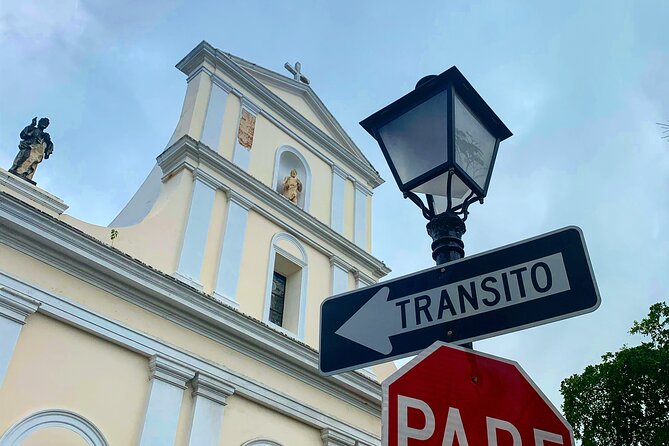
The route includes Parroquia San Francisco de Asis, a church founded in 1756. Daniel explains its background and points out details that can be easy to miss if you only stop for a photograph.
The group enters only when the church is empty or nearly empty. That rule is worth noting. You may see the interior, but you should not count on it, since worship takes priority and the group will not interrupt people who are praying.
I appreciate this approach. Historic churches are still active religious places, not just scenic backdrops. The visit may be brief, but it respects the setting.
Later, the walk reaches Iglesia de San Jose, founded in 1532 and described as the second-oldest church in Puerto Rico. Again, entry depends on how busy it is and whether prayer is taking place. You receive historical context even if the doors remain closed.
The route also includes the oldest church in Puerto Rico, founded in 1521. The supplied schedule does not name it, but Daniel discusses its past and other details. As with the other churches, the interior is visited only when doing so will not disturb worship.
These church stops are short, but together they show how closely faith and civic life were tied in the old city. They also add variety to a walk that otherwise focuses heavily on military defenses.
San Sebastian Street brings color and local tradition

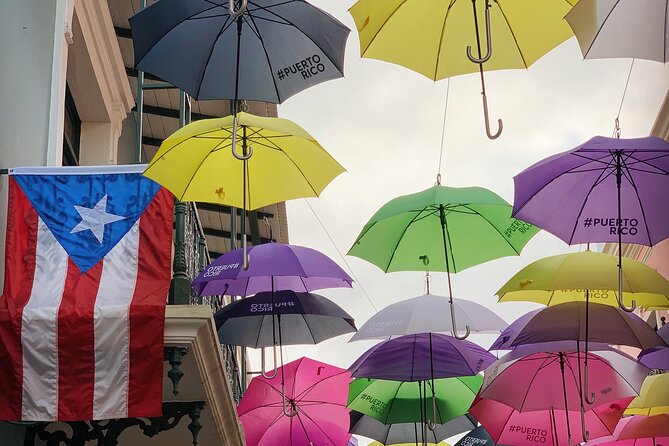
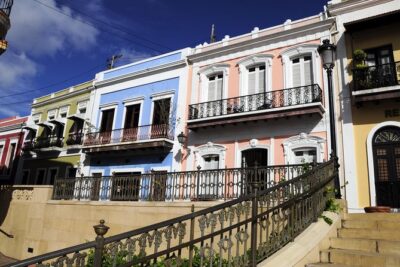
Calle San Sebastian is one of the more atmospheric sections of the walk. You move along cobblestone streets lined with colorful buildings while Daniel explains the street’s place in Puerto Rican culture.
San Sebastian Street is also where Puerto Rico’s largest festival takes place each January. The tour does not include the festival itself, but that detail helps you picture how the street changes during the celebration.
This section is good for photos, although cobblestones can make walking slower and less comfortable. Wear shoes with solid support rather than slick soles. The route is not presented as strenuous, but the surface and warm weather can make two hours feel longer than the clock suggests.
A few more Puerto Rico trips worth weighing up
- San Juan Guided Snorkel With Turtles Tour and Videos
★ 5.0 · 12,947 reviews - Top Rated El Yunque Rainforest & Waterslide – SmallGroup Tour
★ 5.0 · 12,789 reviews - Night Kayak – Condado City Lights Tour
★ 4.5 · 4,807 reviews - Authentic Flavors of San Juan Food Tour
★ 5.0 · 4,741 reviews
The Puerto Rican flag at La Puerta de la Bandera
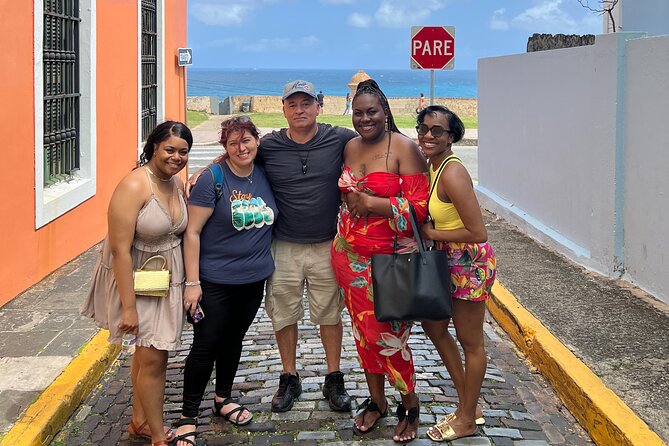
At La Puerta de la Bandera, Daniel explains the Puerto Rican flag and the changes it has gone through. This is a more focused cultural stop, not just another old doorway.
You have time to take photos while hearing the background. That combination works well because the subject is visual, but the meaning behind the flag is not obvious from the image alone.
The stop also breaks up the church and fortress material. You are not only hearing about Spain’s defenses. You are also learning how Puerto Rican identity is represented in the city today.
Castillo San Cristobal is explained from outside
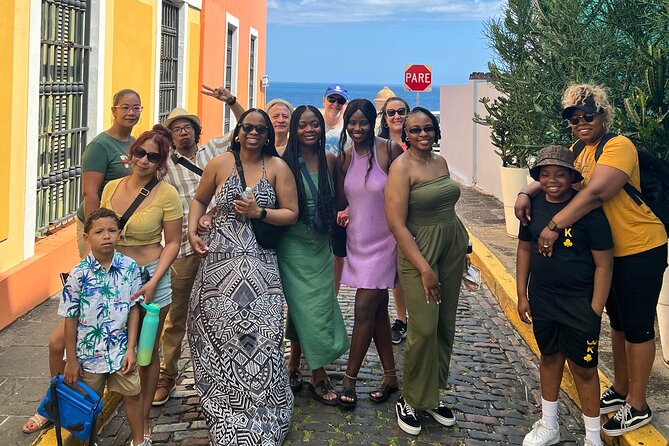
Castillo San Cristobal is described as the largest castle built in America to defend the city. The tour spends about 10 minutes here, explaining its military role and history.
You do not enter the fort during this experience. That is important when comparing the $30 cost with a ticketed castle visit. Daniel provides an introduction, but you will need to visit the castle separately if you want to walk through its tunnels, rooms, and defensive spaces. The attraction has its own entrance fee.
For some people, the outside explanation will be enough for a first orientation. If forts are your main reason for visiting Old San Juan, plan extra time after the walking tour. The route helps you understand why the fort mattered, but it is not a substitute for going inside.
The cemetery, Ballaja, and the military city
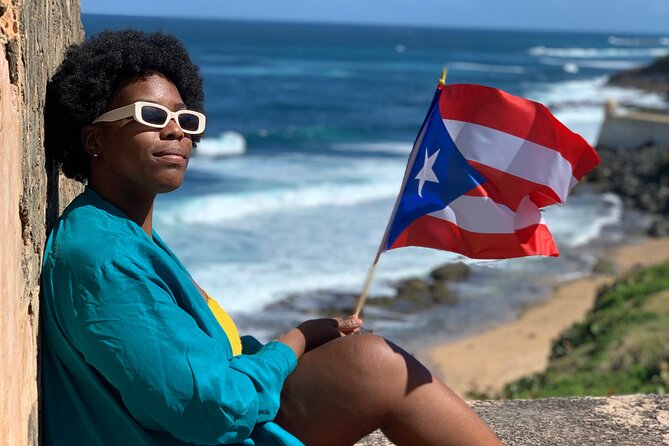
The walk continues toward an old cemetery near the beach and close to Castillo del Morro. Daniel explains its history and location.
The setting matters here. A cemetery on the edge of the water, near one of the city’s main fortifications, connects daily life, death, religion, and defense in a compact area. The stop is described in the route but does not have a numbered stop or a stated duration, so the timing may vary.
Cuartel de Ballaja follows. This was where Spanish soldiers lived, and Daniel discusses its past. There may also be a bathroom stop if available.
That last qualification is practical. Do not depend on this as your only bathroom opportunity, but appreciate it if the building is open for that purpose. The stop gives you a look at the less decorative side of Old San Juan. The city was not only churches and painted facades. It was also barracks, military routines, and the daily work of defending the bay.
Castillo del Morro and the bay entrance
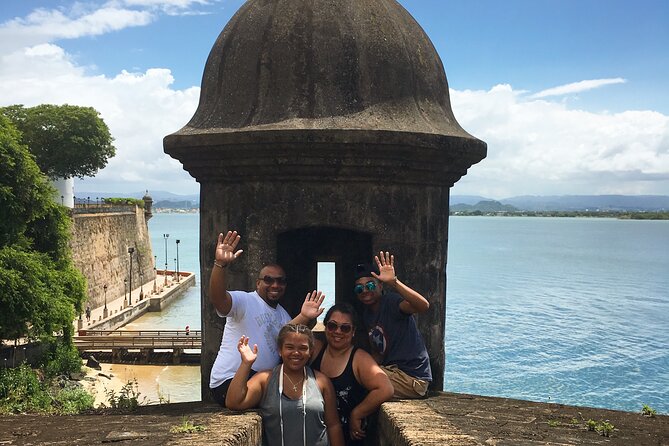
Castillo San Felipe del Morro is another major fortification on the route. It was built in 1539 to defend the entrance to San Juan Bay.
You view it from outside and hear about its history, but you do not enter. As with San Cristobal, a separate visit requires an admission fee. This arrangement can be good value if you want a guided overview first, then decide which fort deserves your extra time and money.
The fort’s position helps make the city’s geography clear. The route is not just a list of buildings. It shows how the forts guarded the approach to the bay and why Old San Juan became such an important Spanish stronghold.
Quinto Centenario and the Telluric Totem
Plaza del Quinto Centenario was built in 1992 to mark 500 years since the discovery of America. Daniel explains the plaza’s history and details hidden within it.
The plaza is also home to the Telluric Totem, created by artist Jaime Suarez. This is a useful change of pace after the military sites. You get a look at a modern public work connected to a major historical anniversary, rather than seeing only colonial-era structures.
The stop shows how Old San Juan layers different periods together. Spanish defenses, old churches, Puerto Rican symbols, and modern public art all appear within the same compact walk.
The city gates and La Rogativa
The Door of San Juan Bautista was one of the main entrances through the walled city. Daniel explains how it functioned and points out details about its past.
Gates are easy to overlook. They can look like simple openings in a wall, but they controlled movement into and out of the city. This stop helps you picture Old San Juan as a guarded settlement rather than an open neighborhood.
At La Rogativa, the route opens toward San Juan Bay. You get a view across the water and can see part of the house associated with Juan Ponce de Leon. Daniel explains the story of the Rogativa, a religious procession connected to the city’s past.
This is one of the stronger scenic moments of the walk. It also offers a pause from the close streets and buildings. Bring a hat or sunscreen, since parts of the route are outdoors and exposed.
The house of Juan Ponce de Leon, dating to 1521, is discussed from outside. You do not enter during the tour, and the house has its own admission fee if you decide to visit later. This keeps the walking tour affordable, but it means you should plan a separate ticket if the interior matters to you.
Fortaleza Street is the practical finish
Calle de la Fortaleza is the main street of Old San Juan and the final commercial stretch of the tour. Daniel explains its history while you pass shops, restaurants, craft sellers, and galleries.
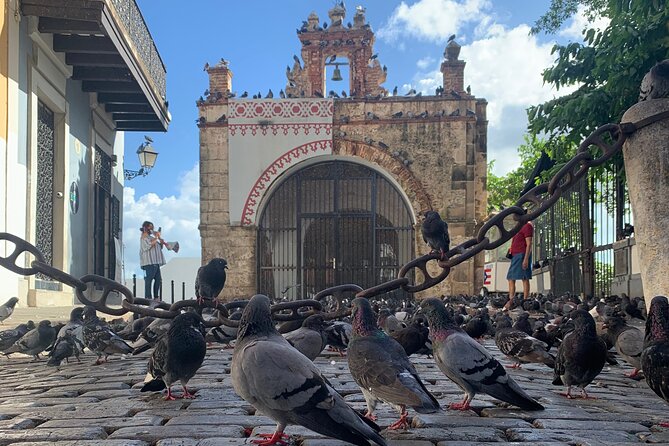
The tour ends at Capilla del Santo Cristo de la Salud, after a short stop to discuss the chapel’s past. From there, you can continue along Fortaleza Street for lunch, shopping, or more independent walking.
This ending is convenient. You do not finish in an isolated area with nothing to do. You finish near places where you can turn the history lesson into the rest of your afternoon.
The route ends back at the meeting point according to the tour details, though the final stop also places you on Fortaleza Street. Confirm the precise end arrangement with Daniel if you have a reservation immediately afterward.
What the $30 price really includes
At $30 per person, this is priced as an affordable guided orientation rather than a full attraction package. The value comes from having Daniel connect many parts of Old San Juan in Spanish: Plaza Colon, churches, the walls, San Sebastian Street, the flag, both major castles, Ballaja, the cemetery, public plazas, city gates, La Rogativa, and Fortaleza Street.
The price does not include entry to Castillo San Cristobal, Castillo San Felipe del Morro, the Ponce de Leon house, or other ticketed interiors. That is not a problem if you mainly want context and photographs. If you want extensive time inside the forts, add their admission costs and several hours to your plans.
The short stops are another part of the value calculation. You will see many places, but you will not spend a long period at each one. I would use this walk to get oriented, then return independently to the fort, church, museum, or street that interests you most.
Timing, comfort, and who should book
The scheduled Spanish tour begins at 12:30 p.m. and lasts about two hours. Midday timing can be useful if you have a free afternoon, but it also means sun and heat may be factors. Apply sunblock, carry water, and wear comfortable walking shoes.
The activity calls for a moderate level of physical fitness. The route uses cobblestone streets and includes multiple stops across the old city. It is not described as a strenuous hike, but you should be comfortable walking for roughly two hours.
Service animals are allowed, and the meeting area is near public transportation. The group size can reach 20 people. Free cancellation is available until 24 hours before the start time, while poor weather or failure to meet the minimum group size can lead to a new date or a full refund.
I would choose this tour if you want Spanish explanations, prefer history told directly on the streets, and value a friendly guide who pays attention to the group. It suits first-time visitors who want a clear introduction before exploring the forts and churches on their own.
I would choose something else if you need guaranteed interior access, a private group, or an English tour without advance confirmation. The route covers a lot, but the forts are outside visits and the church interiors depend on religious services and crowd levels.
Should you book the Old San Juan Tour in Spanish?
Book it if Spanish is important to you and you want a reasonably priced introduction to Old San Juan’s military, religious, and cultural past. Daniel Rivera Viruet is the strongest reason to choose it: he is described as well-informed, patient, enthusiastic, and attentive to comfort, which is exactly what you want on a warm, cobbled-street walk.
Before booking, confirm that you are selecting the 12:30 p.m. Spanish departure. Bring sunblock, prepare for moderate walking, and treat the tour as a well-organized starting point rather than a substitute for entering the castles.
FAQ
Is this tour conducted in Spanish?
Yes. The scheduled 12:30 p.m. tour is in Spanish. English may be available, but you must send a message before booking to check.
How long does the tour last?
The tour lasts approximately two hours.
Where does the tour begin?
The meeting point is listed as 407 C. de San Francisco, San Juan, 00901, Puerto Rico. The walk begins with an introduction at Plaza Colon.
Does the tour enter Castillo San Cristobal or Castillo San Felipe del Morro?
No. Both castles are discussed from outside. Each has a separate entrance fee if you visit afterward.
Is the tour suitable for someone with limited mobility?
The activity requires a moderate physical fitness level and includes walking on cobblestone streets. The supplied information does not provide details about wheelchair accessibility.
Can I cancel for a full refund?
Yes, if you cancel at least 24 hours before the experience start time. Cancellations made less than 24 hours in advance are not refunded.
Just added around San Juan
- Taxi Cab From Humacao To San Juan Airport★ 4.5 · 3 reviews
- Professional Photoshoot in the Vibrant Streets of Old San Juan★ 5.0 · 3 reviews
- Premium Transfer Service FROM or TO Rio Grande Puerto Rico★ 5.0 · 3 reviews
- Private El Yunque Tour To Hidden Waterfall Remote Area★ 3.5 · 3 reviews
- Ponce Historical City Tour★ 4.5 · 3 reviews
- “Off the beaten path” Rain Forest Guided hike with Transportation★ 3.5 · 3 reviews
- Authentic San Juan Guided Walking Food Tour with Pina Colada★ 5.0 · 3 reviews
- Half-Day: Rainforest and Waterslide Adventure with Transportation★ 5.0 · 3 reviews
Old San Juan Walking Tours, compared.

Old San Juan: Segway PT and Segway Xafari Ebike Tours
Read our review →
Old San Juan Bar Crawl: Experience Local Hotspots
Read our review →
Savor the Sunset: Old San Juan Walking Food Tour
Read our review →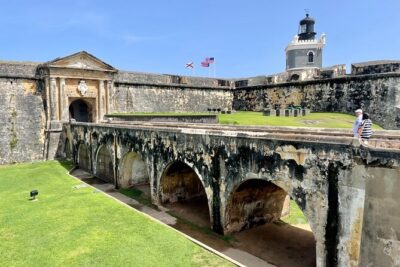

Browse the lists this tour appears in